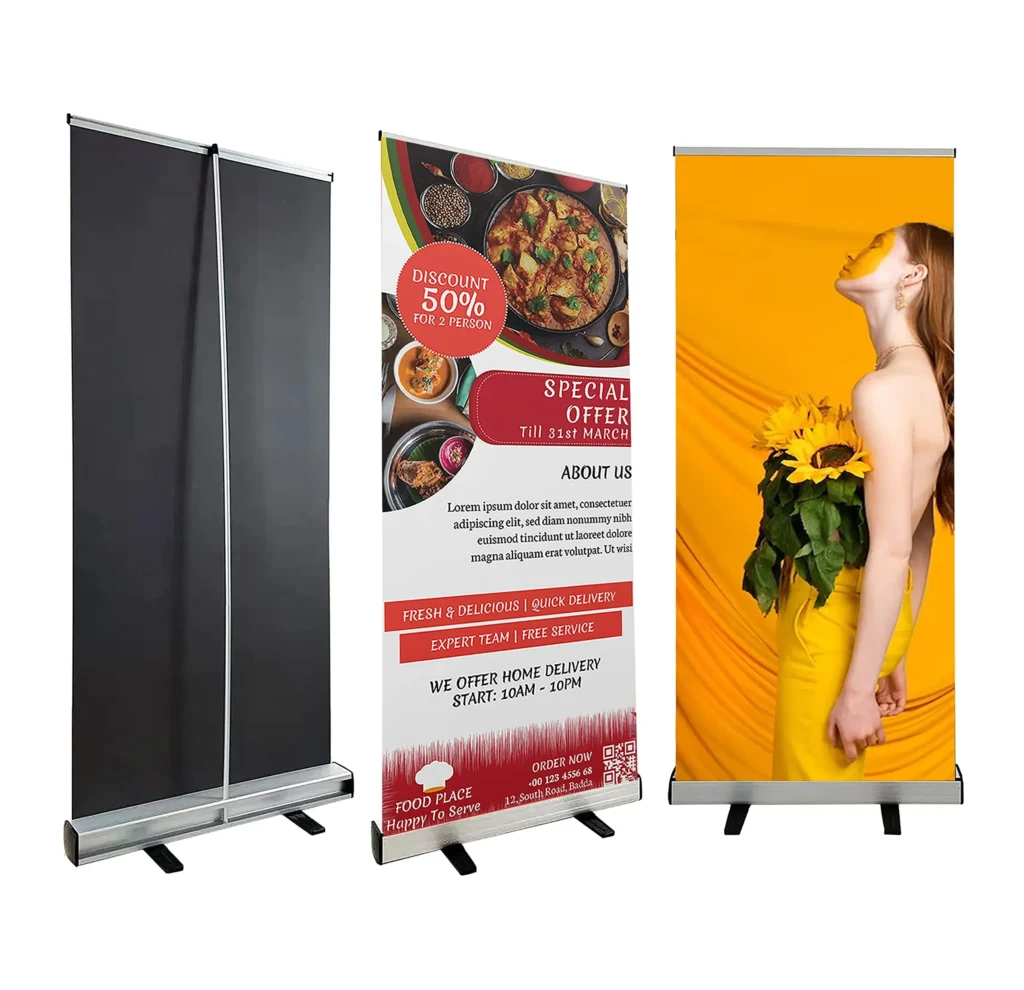
In the world of live events, custom roll-up banners are the quick, portable centerpiece that communicates your brand story in seconds and anchors your booth amid a sea of competing visuals. When designed with intent, they do more than decorate space; they cue attendees to your value proposition, reinforce your messaging, and become a focal point that invites engagement through a clear headline and a single, scannable call to action. A strong banner supports your overarching branding by aligning with your color palette, typography system, and imagery style, helping your team project consistency even from several meters away and through dim booth lighting. From layout and copy to finish and durability, every element should reflect a deliberate strategy—consider the environment, the line of sight, and how the banner interacts with nearby signage and digital displays. This concise guide outlines practical steps for selecting the right size, preparing print-ready files, coordinating with a printer, and deploying your banner in a way that supports booth goals and creates a memorable first impression.
Beyond the basics, your roll-up banners should fit into a broader strategy of brand-consistent event graphics that carry your message from the booth to post-event touchpoints. Think of them as part of your event branding materials that cohere with your website, brochures, and other marketing assets, creating a recognizable pattern across channels and benchmarks. To excel at designing trade show banners, teams should focus on hierarchy, legibility, and a narrative arc that invites attendees to learn more. Creative teams brainstorm branded event display ideas that translate your brand into itemized signs, banners, and handouts that fans will remember. By mapping these elements to a shared color system, typography, and imagery, you create a scalable framework for future events. In practice, this means testing prints, aligning with printers on color values, and ensuring accessibility so the message is legible by all attendees. The result is a coherent, immersive experience where every asset—from banners to digital screens—speaks with one voice. Think of these assets as a unified family rather than isolated marketing pieces, sharing a common system of elements: a reliable grid, consistent margins, and a flexible approach that allows for seasonal variants. When teams align on content strategy, the copy on banners can be repurposed on handouts, digital panels, and social posts, reinforcing a single narrative. Practical steps include coordinating with a design brief that outlines audience segments, key value propositions, and calls to action that translate well from print to screen. Color management matters; printers should confirm Pantone swatches, CMYK conversions, and soft proofing to minimize surprises on reveal day. Typography choices should prioritize legibility from a distance, with sizes adjusted for typical show floor lighting conditions. Imagery should be consistent in style and resolution, using alt text and accessible color contrasts to reach attendees with diverse abilities. Material selection—vinyl, fabric, or hybrid substrates—impacts durability, weight, folding behavior, and perceived quality, so test options with mock-ups ahead of time. Finally, a clear on-site plan for setup, sign-off procedures, and contingency printing can prevent delays and ensure that your visuals contribute to a seamless attendee experience.
Crafting Brand-Consistent Event Graphics for Maximum Trade Show Impact
Brand-consistent event graphics create a cohesive first impression that travels across every touchpoint. When your visuals share a common typography, color, and tone across banners, brochures, and digital assets, attendees recognize your brand quickly and understand your value proposition even from a distance. Aligning your roll-up banners with your broader identity reinforces recognition and trust in busy trade show environments.
To achieve this, start with a design system that binds your banner visuals to your event branding materials. Clear brand guidelines guide typography, color, imagery, and messaging, making it easier to maintain consistency when you scale across multiple banners and campaigns—an essential part of designing trade show banners that look like one brand, not a collection of assets.
Designing Trade Show Banners that Reflect Your Brand Identity
Designing trade show banners that grab attention requires a readable layout, bold headlines, and a clear visual hierarchy designed to communicate in seconds. When banners mirror your brand identity, attendees instantly associate the message with your product and company.
Use a consistent grid, restrained color palette, and high-contrast typography so your banner remains legible from several meters away. Integrate brand-consistent event graphics across the banner and your other event branding materials to reinforce recognition and reduce cognitive load for visitors.
Branded Event Display Ideas: Beyond the Banner to Create Cohesion
Branded event display ideas extend beyond a single roll-up to create a cohesive booth experience. Combine backdrops, signage, digital screens, and counter visuals that share a unified mood, color scheme, and typography.
When planning branded event display ideas, ensure every piece—from the banner to the handouts—tells the same story. This cross-asset consistency boosts booth engagement and streamlines your on-site messaging.
Efficient Production of Event Graphics: From Files to Finished Banners
Efficient production starts with print-ready files, correct color spaces (CMYK), and high resolution (300 DPI at final size). Choosing the right material—vinyl for durability or fabric for a premium feel—affects both aesthetics and portability.
Collaborate with a printer who understands your brand guidelines so color and layout reproduce faithfully. Request proofs and test color accuracy to ensure brand-consistent event graphics emerge from the press as envisioned.
On-Site Setup: Using Custom Roll-Up Banners for Maximum Engagement
On-site setup hinges on strategic placement, optimal sightlines, and clean transitions with your other event branding materials. Position custom roll-up banners at eye level where they support the booth narrative without blocking staff interactions or attendee flow.
Maintain readability under show lighting, rotate banners to refresh the look across sessions, and train staff to guide visitors toward your calls to action—whether it’s a website, QR code, or meeting request. Proper on-site maintenance ensures your brand-consistent event graphics stay impactful throughout the event.
Measuring Success and Iterating: Aligning Banners with Event Branding Materials
Measure success by booth engagement, lead quality, and alignment with your broader event branding materials. When banners connect to your website, product pages, and follow-up content, you create a seamless attendee journey and stronger return on investment.
Use post-event analysis to iterate: update imagery, refine copy, and adjust layouts based on feedback and performance data. Keeping brand-consistent event graphics fresh across campaigns strengthens recognition and supports ongoing marketing programs.
Frequently Asked Questions
How can I ensure brand-consistent event graphics when using custom roll-up banners at a trade show?
Start with your brand guidelines. Use the same logo treatment, typography, and color values on your custom roll-up banners as in your website and brochures to deliver brand-consistent event graphics. Keep the layout clean, with a clear headline and one strong CTA, and ensure the imagery supports your core message. Coordinate with your printer to preserve color accuracy and safe zones.
What size and layout should I choose for custom roll-up banners to fit with event branding materials?
Choose sizes that fit your booth and viewing distance (common is 33×80 inches for single panels; consider double-sided options). Design with a grid, generous negative space, and a simple visual hierarchy so it aligns with your event branding materials. Use your brand typography and colors, and reserve space for a logo, headline, and a clear CTA. Verify print specifications and bleed with your printer for consistency.
How do I select imagery and copy for custom roll-up banners to support brand-consistent event graphics while designing trade show banners?
Select high-resolution imagery that matches your brand mood and products; keep imagery understated to avoid clutter. Write concise, action-oriented copy that communicates value quickly and aligns with your brand voice. Use a single, prominent message and a clear CTA (URL or QR code) to maintain brand-consistent event graphics across assets.
What production considerations should I know when producing custom roll-up banners for trade shows and how they fit with branded event display ideas?
Decide on vinyl or fabric based on durability and premium feel, and choose matte or gloss finishes with readability in mind. Provide print-ready files at 300 DPI, with CMYK color space and bleed. Confirm color exactness with the printer, request proofs, and ensure hardware compatibility for your roll-up banner system. This supports branded event display ideas and consistent visuals.
How can I maximize on-site impact with custom roll-up banners while maintaining brand consistency across all materials?
Plan placement to complement booth staff and traffic flow, and pair banners with brochures, digital displays, and signage for a cohesive experience. Use on-brand imagery and a clear CTA that mirrors other event branding materials. A unified look across everything strengthens brand-consistent event graphics and boosts engagement.
What are common mistakes when designing custom roll-up banners and how can I avoid them to keep cohesive trade show banners and event branding materials?
Common issues include cluttered headlines, more than two typefaces, low-resolution imagery, mismatched colors, and poor accessibility. Fix them by sticking to your brand guidelines: limit typography, use high-res assets, rely on your Pantone/CMYK values, and ensure high contrast. Run proofs and test legibility from typical viewing distances to preserve brand-consistent event graphics.
| Aspect | Key Points |
|---|---|
| Introduction | Introduction In the world of live events, first impressions matter. Attendees walk past hundreds of booths, and the visuals you present in seconds can determine whether your brand is noticed, remembered, and taken seriously. Custom roll-up banners are a staple of any event display kit because they’re portable, cost-effective, and highly impactful when done right. The key to maximum impact is ensuring brand consistency across every element of your banner graphics. |
| Value of brand-consistent graphics | Understanding the value of brand-consistent event graphics Brand consistency means more than using the same logo or color palette. It’s about tone, typography, imagery, and messaging that reflect your brand’s personality across every touchpoint. When your event graphics—especially roll-up banners—are aligned with your website, brochures, social presence, and product packaging, you reinforce recognition and trust. For event organizers, this translates into higher booth engagement, more qualified leads, and a smoother attendee experience. For marketing teams, it means less time fixing misaligned visuals and more time driving conversations with clear, on-brand calls to action. By planning your custom roll-up banners with brand-consistent event graphics in mind, you set up your team to communicate a unified story in noisy environments. |
| Planning banner project: define, design, deliver | Planning banner project: define, design, deliver To create effective custom roll-up banners, start with a plan that binds your design to practical constraints and your brand guidelines. Below are the core steps and considerations that ensure your banners fit naturally into your broader event branding materials and refer back to your visual identity.
|
| Bringing it together | Bringing it together: alignment with broader branding and event materials The best banners do more than fill space; they reinforce your brand story across all event branding materials. When your custom roll-up banners mirror your website visuals, product packaging, and marketing collateral, attendees experience a cohesive narrative that strengthens trust and recall. This approach also minimizes design repetition for future events because you’ve established a repeatable framework for layout, typography, color, and messaging. |
| Common pitfalls | Common pitfalls to avoid
|
| Beyond banners | Beyond banners: integrating with your event marketing strategy Brand-consistent event graphics extend beyond the roll-up banners. Align your banners with the rest of your event ecosystem—backdrops, signage, handouts, and digital assets—to reinforce your narrative. Consider running a simple cross-channel test before you commit to large print runs. If your banners support a new product launch, ensure the message is consistent across launch materials, trade show booth visuals, and post-event follow-up content. These steps help maintain consistency and maximize impact across your entire event marketing program. |
Summary
custom roll-up banners are a powerful component of any event marketing plan. They offer a portable, cost-effective way to deliver brand-consistent visuals that grab attention and drive engagement at conferences, trade shows, product launches, and corporate events. By defining clear format and constraints, designing with a strong hierarchy, choosing readable typography and color, curating on-brand imagery, and coordinating with a trusted printer, you ensure your banners reinforce your brand across touchpoints. This cohesive approach helps attendees recognize your brand quickly, engage with your message, and remember your value long after the show floor clears.